Köy Ekmeği (Turkish Village Bread) from Karakılçık

Some cookbooks quietly become part of your kitchen routine, and Karakılçık was one of those books for me.
When it was first published, I baked from it constantly. Then, for a long time, it went completely out of print and disappeared from bookstore shelves. Over the years I received so many messages asking about recipes from the book, especially from people who had missed the first edition.
So when I heard a second edition was finally coming, I immediately wanted to revisit one of the breads I remember most fondly: Köy Ekmeği, a simple Turkish village-style sourdough.
What is Köy Ekmeği?
Köy Ekmeği literally means “village bread” in Turkish, but there is no single version of it. Across Turkey, village breads vary from region to region, from darker rye-heavy loaves to softer white country breads baked in wood-fired ovens.
This version, from Taha Dinç’s Karakılçık, is a modern sourdough interpretation: rustic, lightly tangy, with a crisp crust and soft airy crumb.
One of the reasons I chose this bread for my reel is because the recipe is publicly available online, which means I can comfortably share it here with readers who have been searching for this book for years.
There is something very full-circle about baking from Karakılçık again just as the second edition is returning.
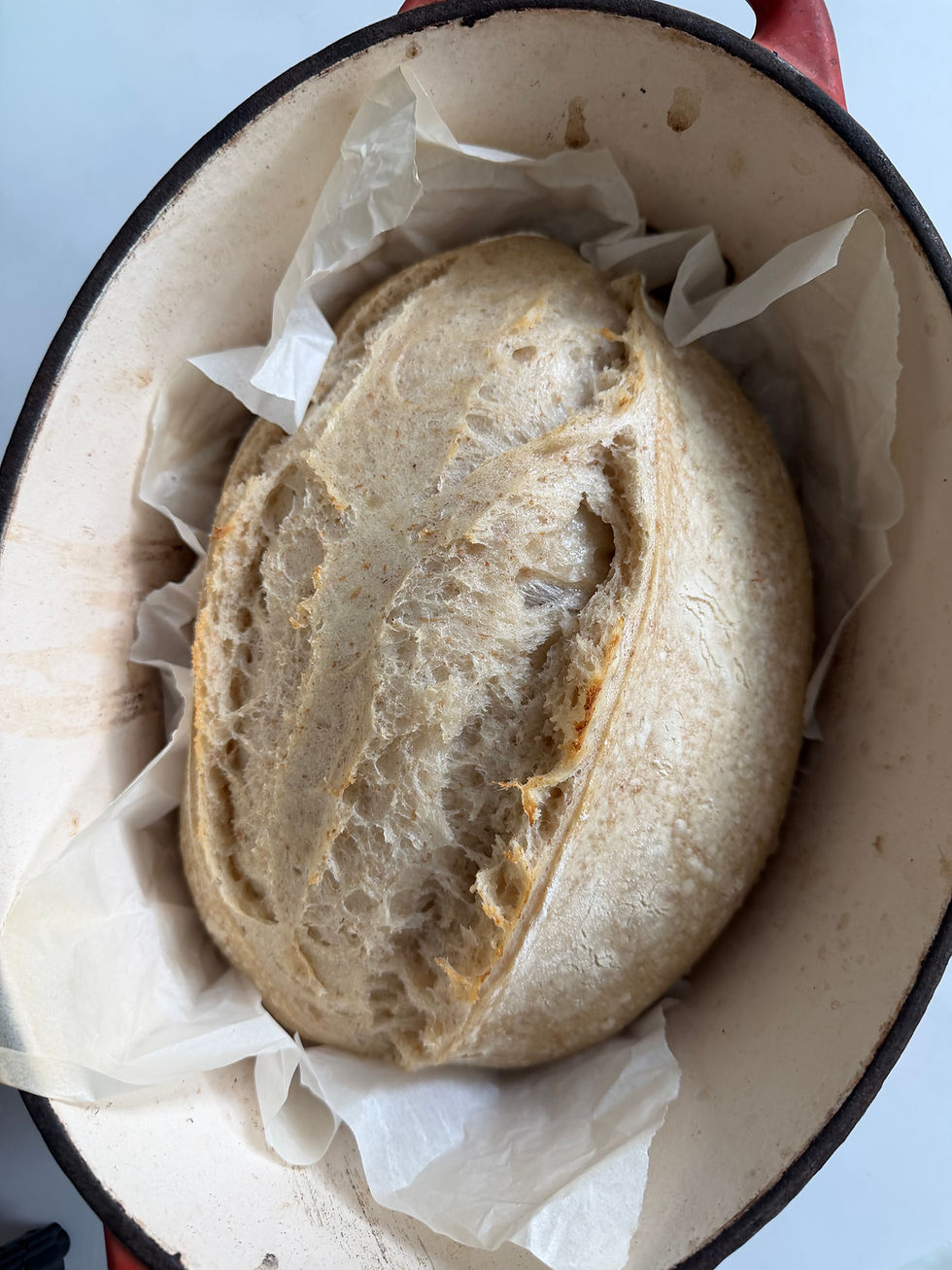
Köy Ekmeği Recipe
Ingredients
400g white bread flour
50g rye flour
50g white spelt flour
(I used this combination in place of karakılçık flour)
380g water
100g active sourdough starter
10g salt
10g water
Method
Combine the white bread flour, rye flour, white spelt flour, and 380g water in a large bowl and mix until no dry patches remain. Leave to rest for around 30 minutes.
Add the sourdough starter and mix well until fully incorporated.
Dissolve the salt in the remaining 10g water and add to the dough, mixing until smooth.
Leave the dough to ferment at room temperature, performing a series of stretch and folds during the first part of the bulk fermentation until the dough becomes smoother and more elastic.
Once the dough has risen and feels airy, shape into a tight round loaf and place seam-side up into a well-floured banneton or bowl lined with a floured cloth.
Leave to proof, either at room temperature or overnight in the fridge for a slower fermentation and deeper flavour.
Preheat the oven with a Dutch oven inside until very hot. Turn the dough onto baking paper, score the top with a sharp blade, and carefully transfer into the hot Dutch oven.
Bake covered until the loaf has risen well, then uncover and continue baking until deeply golden with a crisp crust.
Allow the bread to cool fully before slicing.
Notes
I used a sourdough starter fed with 90% white flour and 10% rye flour
I cold proofed the dough overnight
Baking in a Dutch oven gives excellent oven spring and crust
The flavour improves even more the next day
If you enjoy sourdough baking and are curious about Turkish bread traditions, and speak Turkish Karakılçık is a beautiful book to explore. Who knows maybe one day it will be translated to Englush too. Right now I’m very happy to see it returning to print again.


Comments